
 Made in the USA
Laser Fume Extractors
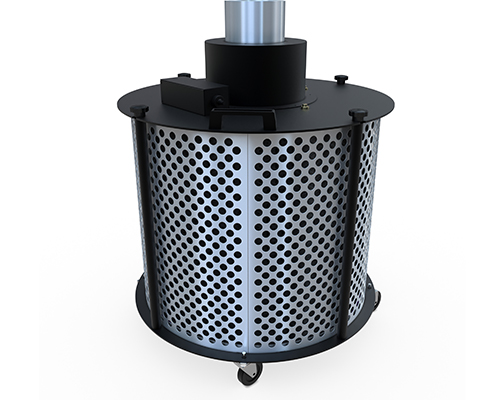
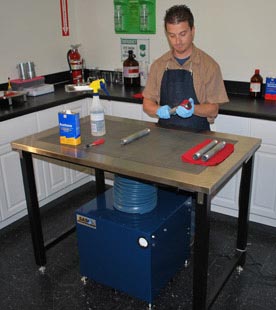
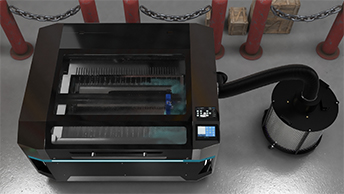
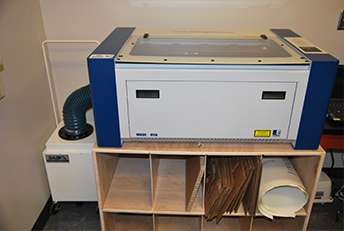
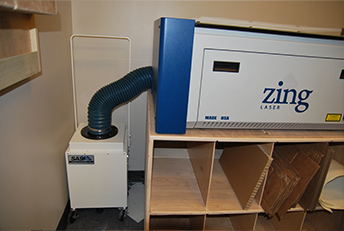
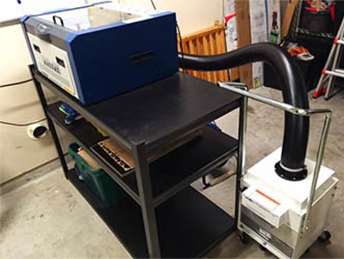
Laser Fume Extractors provide vital source capture fume control for laser applications such as cutting, engraving, and marking. By implementing laser fume extractors, industrial and laboratory facilities can help protect operators and nearby employees from long-term health effects and aid in preventing damage to expensive laser electronics. Inhalation of laser fumes can cause respiratory problems and skin, eye, or nose irritation. Prolonged exposure to laser fumes can cause lasting health side effects such as chronic respiratory conditions (i.e. bronchitis or asthma), dizziness, neurological effects, and, in some cases, even cancer. Also, laser smoke particles can build up on the motor, the lens, or materials, leading to reduced cutting efficiency, equipment damage, maintenance concerns, and safety issues. Laser fume extraction systems work by connecting directly to the laser exhaust port with a flame-retardant hose or as a stand-alone system. Standalone fume extractors utilize a self-supportive flex arm that captures fumes by placing the capture hood next to the laser system exhaust or outlet. These systems offer portability and flexibility, allowing the unit to be moved out of the way for storage or to a different area for other industrial, commercial, or laboratory fume control applications.
Laser Fume Extractors
Model # SS-XXX-XXX
Unit Configurations Quick Compare
What are Laser Fumes?
Laser fumes are produced when a laser cutter or engraver emits high-intensity light that vaporizes or melts a substrate such as metal, plastic, or paper. This process creates smoke containing ultra-fine particles, fumes, and gases such as volatile organic compounds (VOC’s).
Are Laser Fumes Harmful?
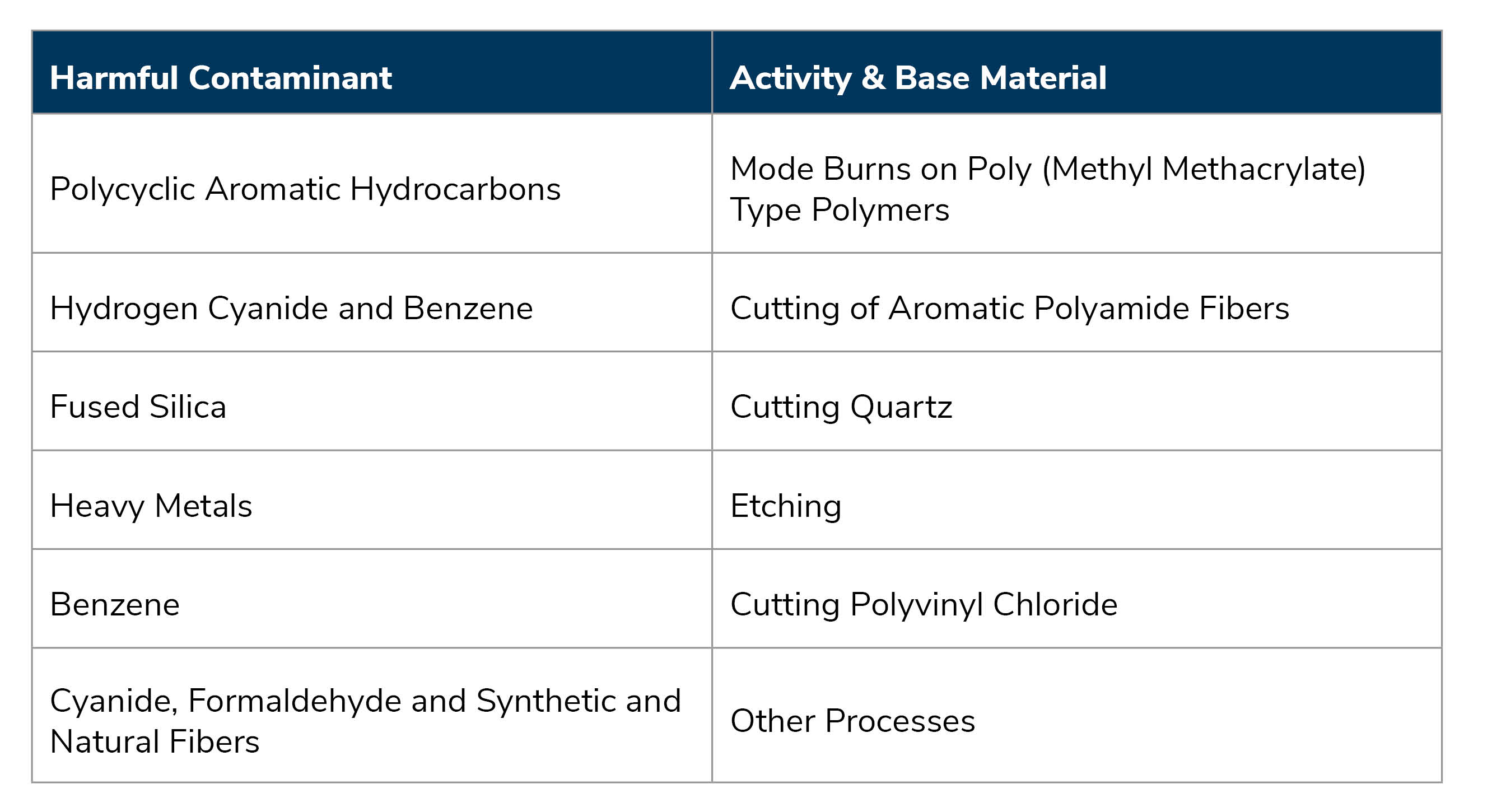
Laser fumes can be harmful with the severity depending on the type of material used and type of laser system. Metals such as stainless steel produce hexavalent chromium, which poses lasting health effects, even possibly leading to cancer. Plastics or acrylics create one of the most harmful fumes, containing formaldehyde and VOC’s. Wood and leather fumes contain heavy particulate matter, soot, and strong odors. All laser fumes consist of ultra-fine particulate that can become lodged deeply in the lungs, leading to respiratory concerns and conditions. Also, the type of laser system can affect the volume and density of the laser fumes. Fiber laser systems produce dense fumes requiring a more powerful fume extractor, while CO2 and UV lasers are lower powered and use lighter substrates. According to the Princeton University Environmental Health and Safety website, examples of air contaminants produced by the interaction between the laser beam and substrate include the following:
Laser Fume Regulations
In OSHA’s Technical Manual Regarding Laser Fumes: INDUSTRIAL HYGIENE. Potential hazards associated with compressed gases, cryogenic materials, toxic and carcinogenic materials, and noise should be considered. Adequate ventilation shall be installed to reduce noxious or potentially hazardous fumes and vapors, produced by laser welding, cutting and other target interactions, to levels below the appropriate threshold limit values, e.g., American Conference of Governmental Industrial Hygienists (ACGIH) threshold limit values (TLV’s) or Occupational Safety and Health Administration’s (OSHA) permissible exposure limits (PEL’s).
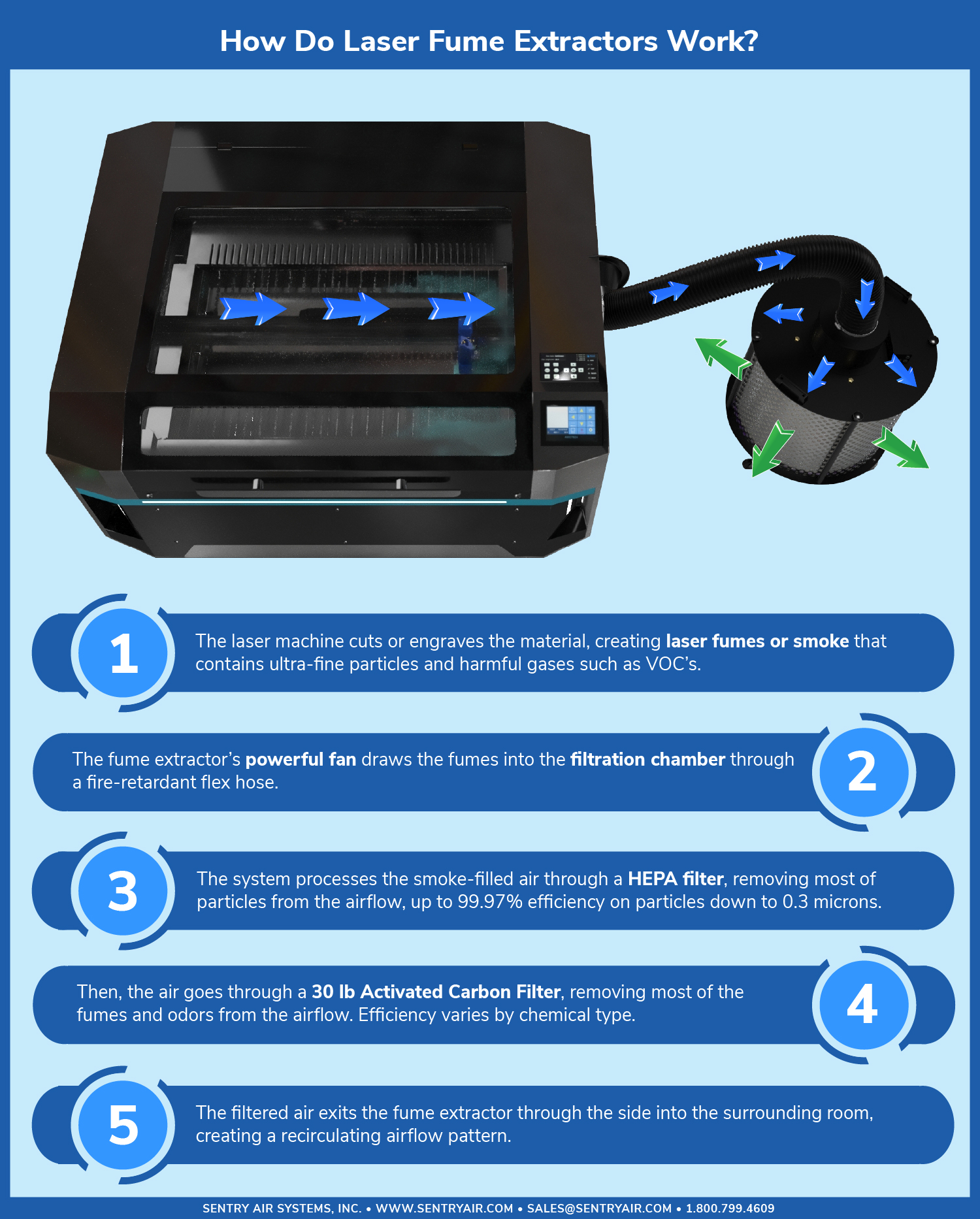
How Do Laser Fume Extractors Work?
Laser Fume Extractor
Product Video
Base Unit Dimensions:
- Diameter: 30.5”
- Height: 40”
Optional Arm Dimensions:
- 6" Round x 72" Long fire retardant flex hose
- 6" Round x 12/25" Flame Retardant Hose
Total Weight:
Approx. 150 lbs.
Blower Material:
16 ga. carbon steel with polyester epoxy coating on all surfaces
Filters
HEPA - Up to 99.97% efficient on particles down to 0.3 microns
30 lb Activated Carbon Filter – efficiency varies per chemical.
Air Volume:
Up to 630 CFM with HEPA/Carbon filter
Electrical:
115/1/60, 5.2 amps
Sound Level:
75 dba @ 3 ft.
Max Operating Temperature:
Not to exceed 170 degrees Fahrenheit
Warranty:
Limited two-year warranty from date of shipment on defects due to materials or workmanship.
Features & Benefits
Features & Benefits of Laser Fume Extractors
• Designed specifically for laser fume extraction applications• Ideal for laser cutting, engraving, marking, and related fume-generating processes
• Quiet and efficient operation suitable for industrial and laboratory environments
• Helps improve indoor air quality and operator safety
• Helps reduce particle build-up on the laser system to protect it from damage, reduce maintenance, and improve the precision of cuts.
• High airflow performance up to 650 CFM with filters installed
• Variable speed controller for adjustable airflow and process flexibility
• Dual filtration chamber, including a large-capacity HEPA filtration system for fine particulate removal and 30 lbs. of activated carbon for effective odor and VOC adsorption
• Compact, self-contained filtration system for easy installation and operation
• 6” inlet compatible with standard exhaust hose connection for easy integration with laser exhaust systems (hose not included)
• Energy-efficient design with low electrical consumption — only 5.2 amps
• Heavy-duty industrial construction for reliable long-term operation
• Made in the USA
Accessories
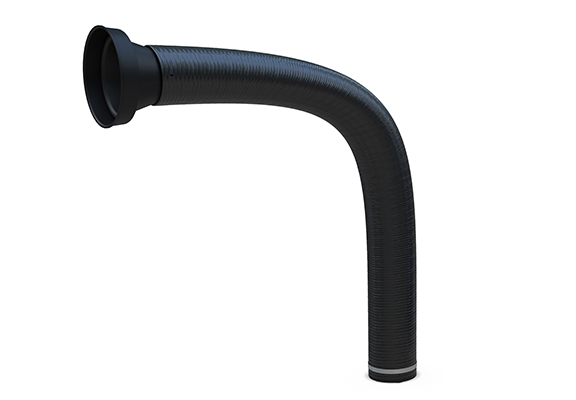
SS-006-BH
6” x 72” Flex Arm
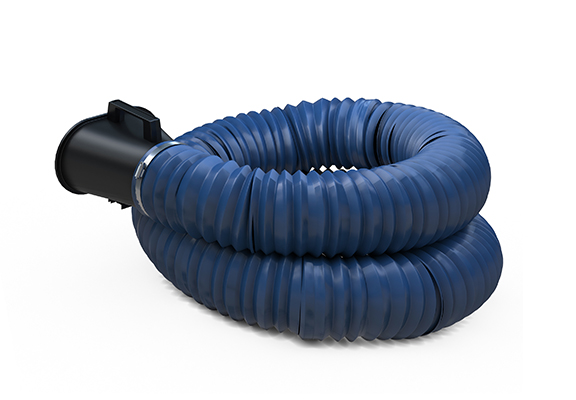
SS-006-BH
6” x 72” Flex Arm
Request A Quote or Contact Us
If you prefer, you may contact us by calling 800-799-4609, or e-mail us at sales@sentryair.com.
Name and Email are required.